
Elk Rock Island
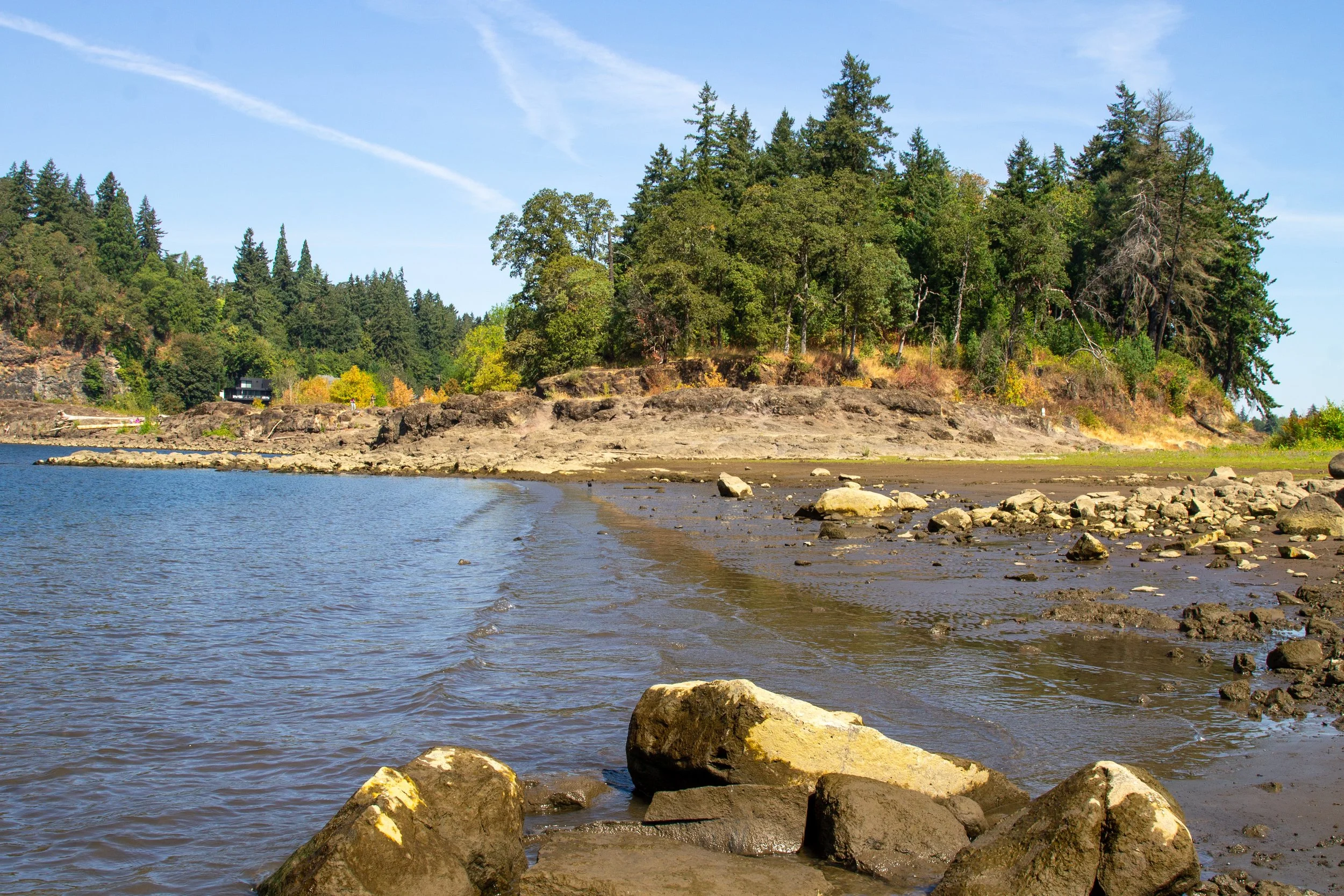
Only 15 minutes from downtown Portland, Elk Rock Island is an easy, last-minute escape into nature. Wild and undeveloped, the tiny island in the Willamette River is a place to sit by the water, watch birds, and look for rare plants. For part of the year, the only way to reach it is by boat. In drier months, a land bridge connects it to the mainland. Here’s everything you need to know about visiting Elk Rock Island, one of Portland’s coolest hidden gems.
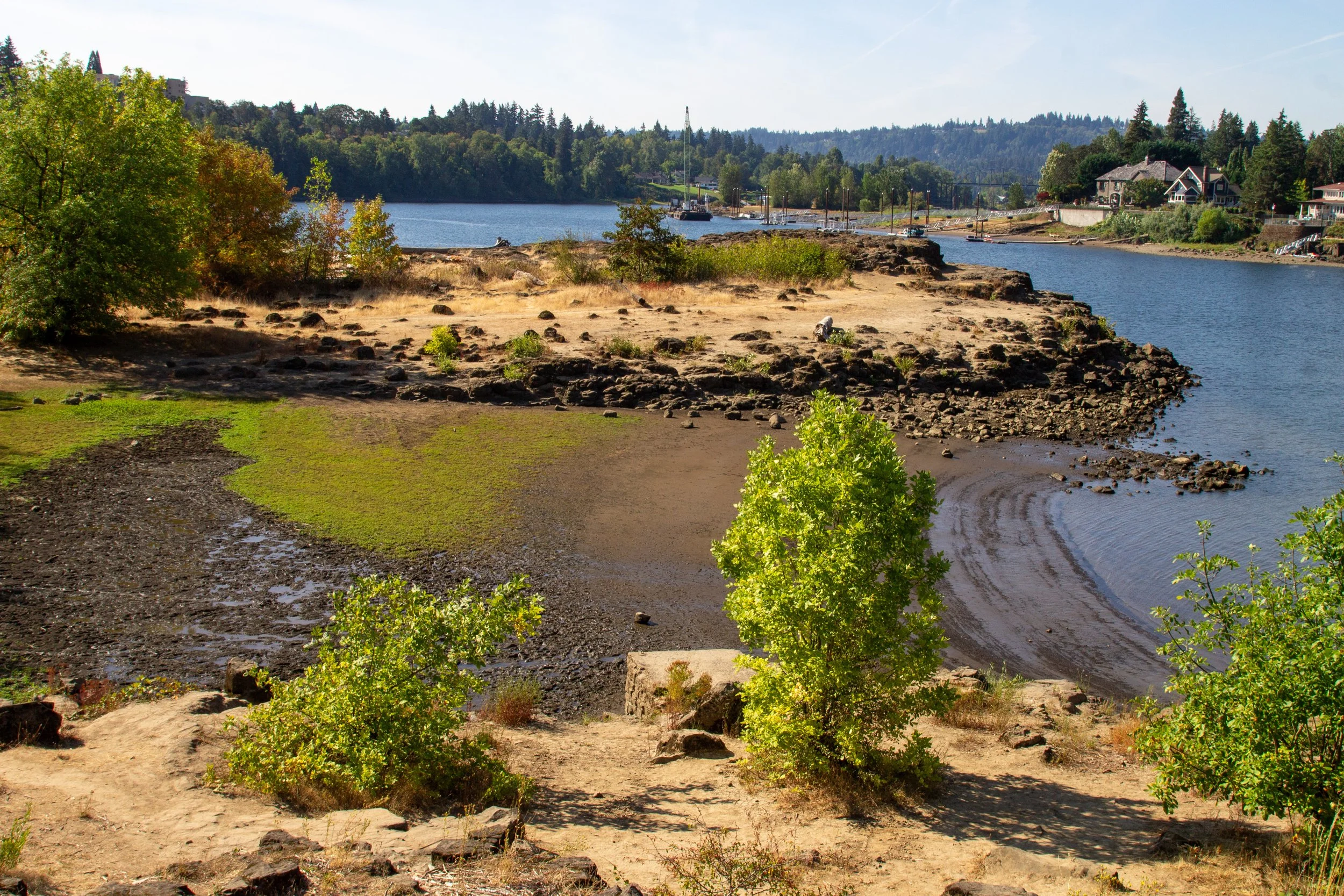
Elk Rock Island
Know before you go
Cost: Free
Parking: Elk Rock Island doesn’t have a parking lot. Limited street parking is available around the Spring Park entrance. The spots can fill up on summer weekends. Watch for no parking signs.
Amenities: Restroom (port-a-potty), picnic tables, and playground at the Spring Park entrance.
Dog-friendly: Yes, leashed dogs are allowed on Elk Rock Island.
Accessibility: One ADA parking spot is next to Spring Park. The Spring Park entrance has a flat, paved trail. Past the playground, it stays wide and even, but the grades get steep. Once you reach the land bridge to Elk Rock Island, the terrain becomes irregular.
Hazards: Watch for poison oak. It’s mostly in the interior of Elk Rock Island.
Season and land bridge
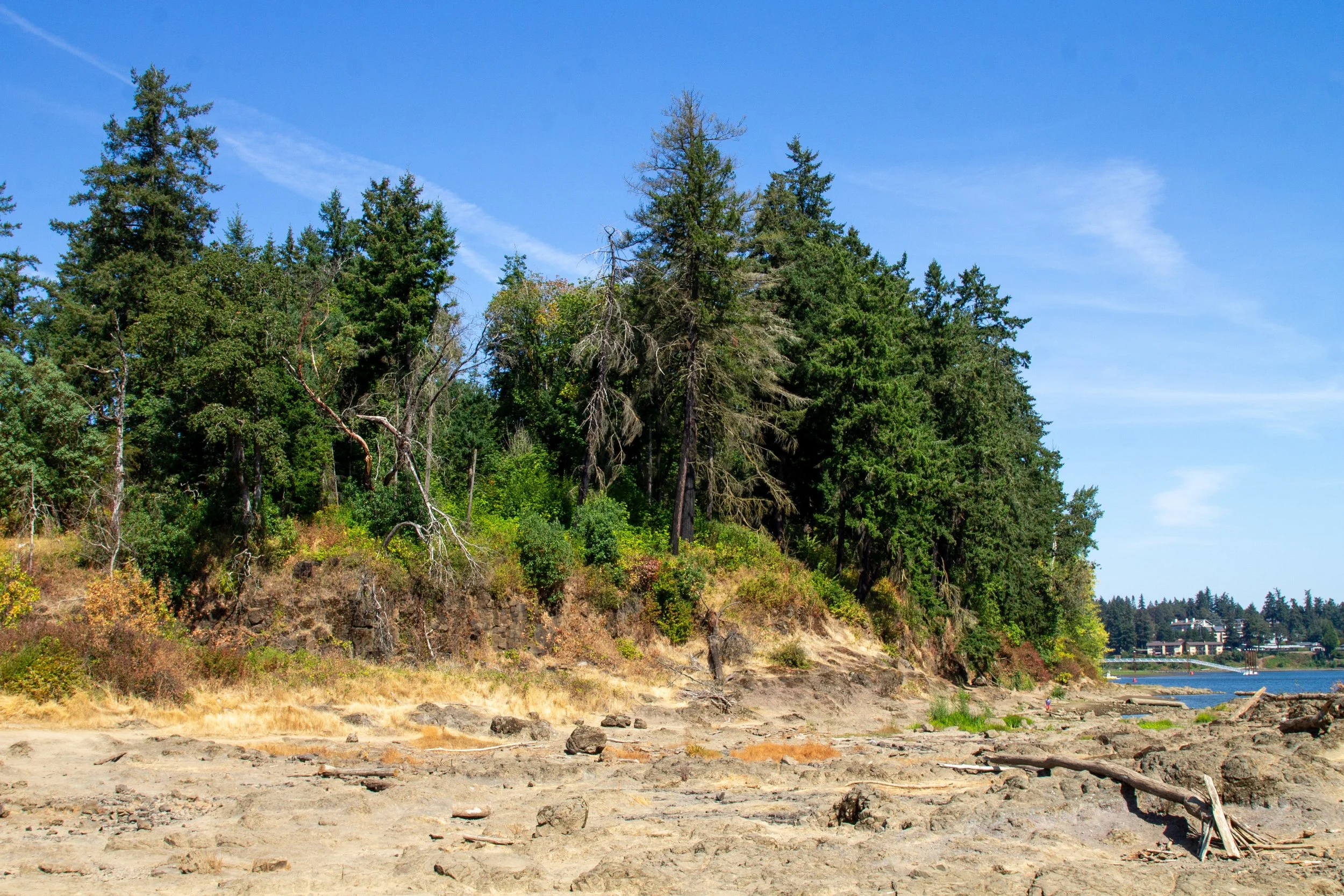
Land bridge to Elk Rock Island in late summer
Elk Rock Island is only an island for part of the year, when the Willamette River is low. You can get there:
On foot: usually from spring through fall
By boat only: winter and early spring
When water levels fall in the Willamette River, a land bridge emerges, connecting Elk Rock Island to the mainland. In spring, you may have to do some rock hopping. In drier seasons, it’s an easy walk.
The Willamette River has tides. If you’re visiting when water levels are low, go ahead and don’t worry about them. During wetter seasons, check out a tide table before visiting Elk Rock Island.
Hiking on Elk Rock Island
Distance: 1-ish mile lollipop loop
Elevation: 100 feet
Difficulty: Easy (when water levels are low)
Start at Spring Park Natural Area. Past the playground and picnic area is the trail to Elk Rock Island.
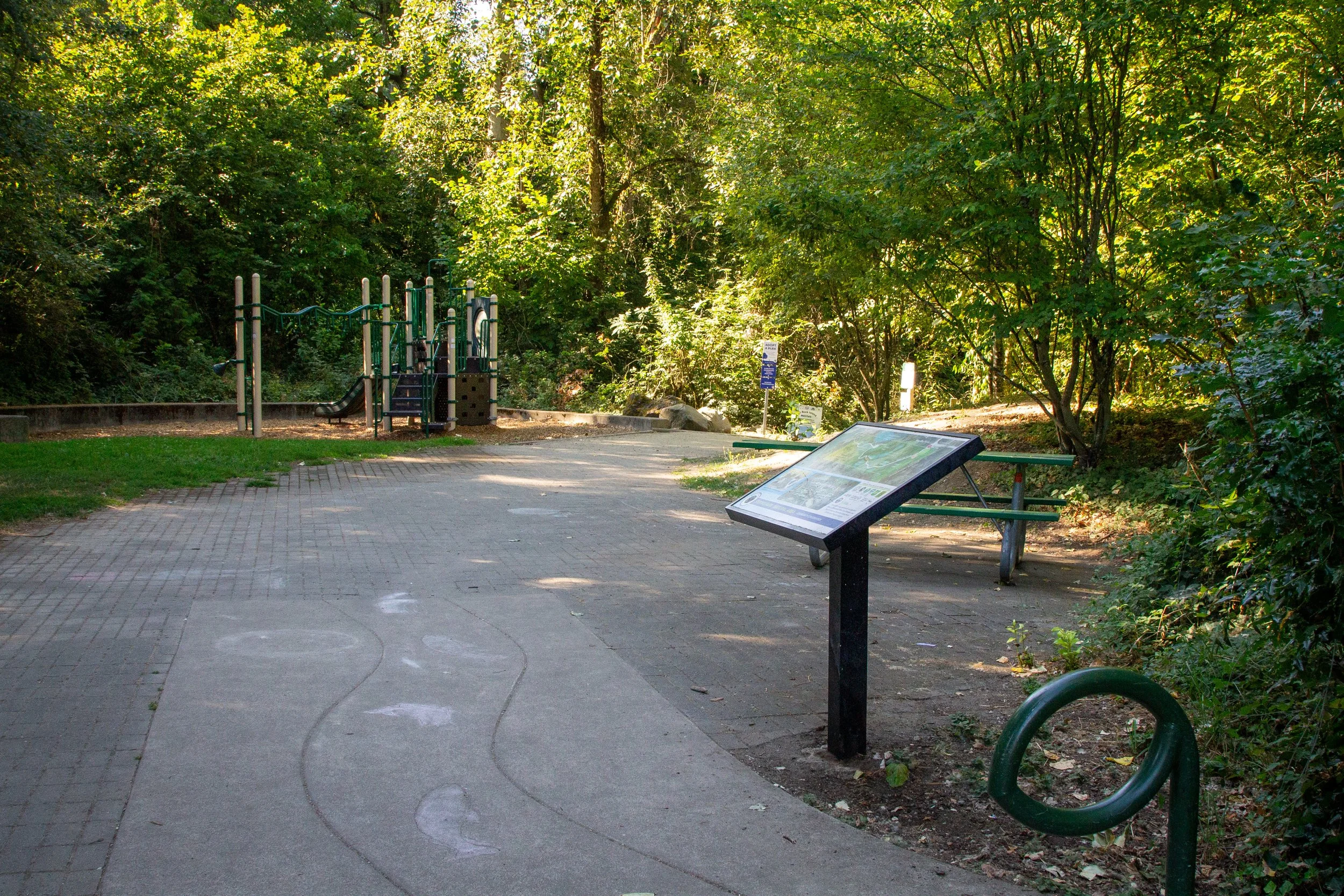
Start here
A wide crushed gravel trail descends into a forest of cottonwood and alder. You’ll cross a short boardwalk and pass a viewpoint overlooking a slough.
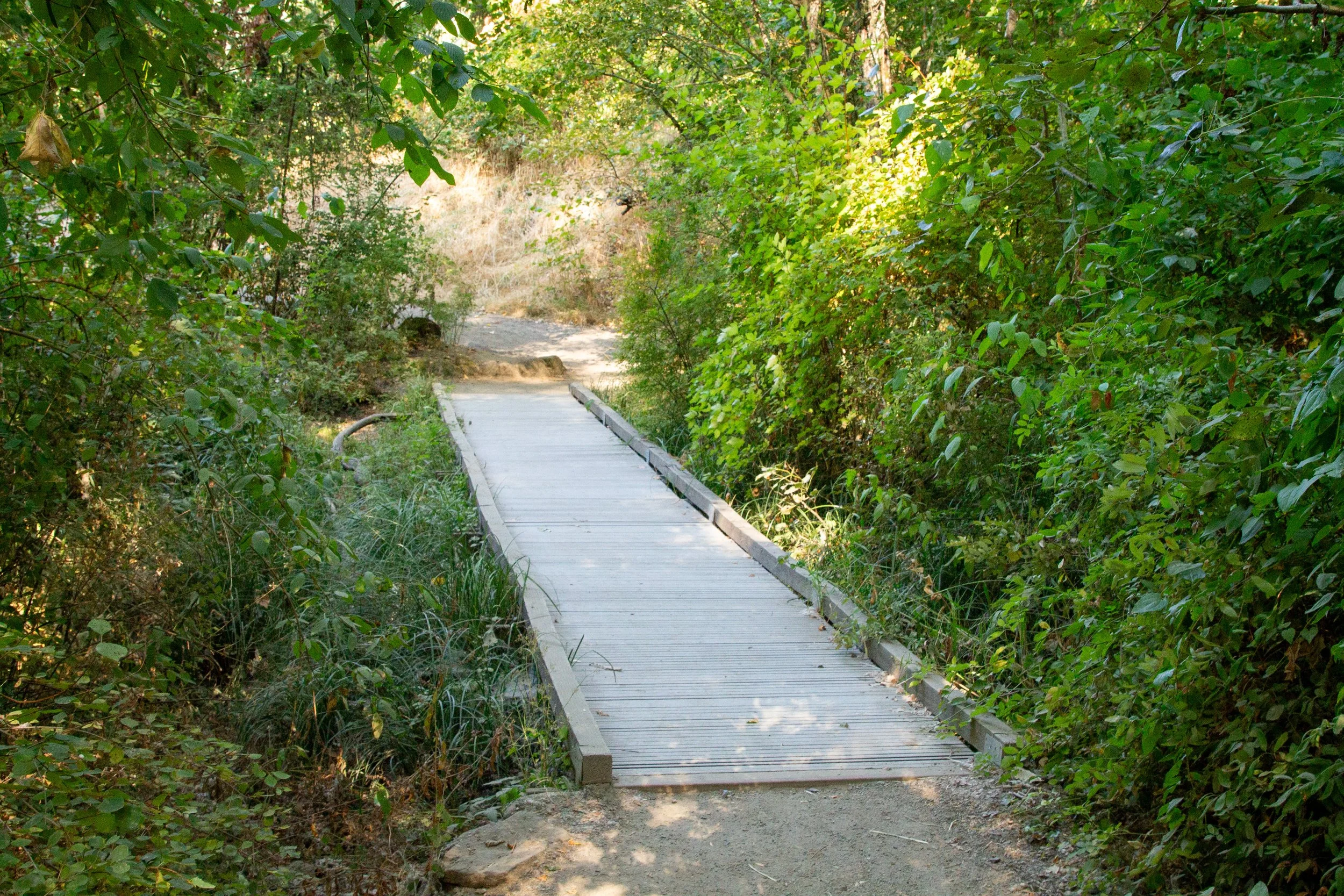
Trail to Elk Rock Island
After about a quarter mile, you’ll reach the crossing onto Elk Rock Island. The seasonal land bridge is made of 40-million-year-old basalt from a local eruption. In late summer, it’s a broad rocky expanse. In spring, the journey might require some rock hopping.
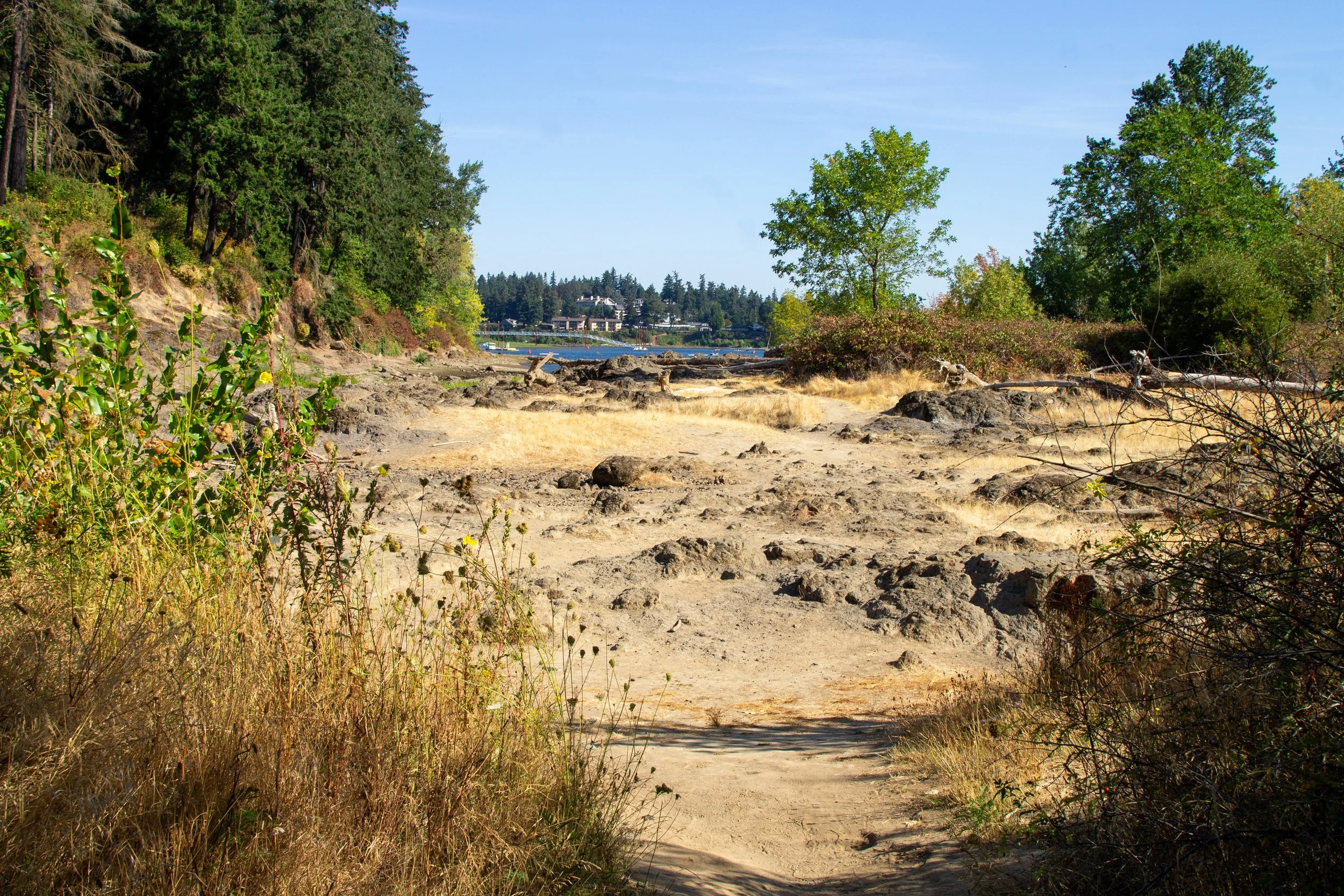
Land bridge
Across the land bridge, a trail circles the perimeter of Elk Rock Island. You can go either direction. It’s mostly flat and easy but gets a little rough on the north side of the island, more like a rock scramble than a walk. Across the Willamette River are the Elk Rock cliffs and some swanky mansions. If you’ve ever been to Elk Rock Garden, it’s at the top of the cliffs.
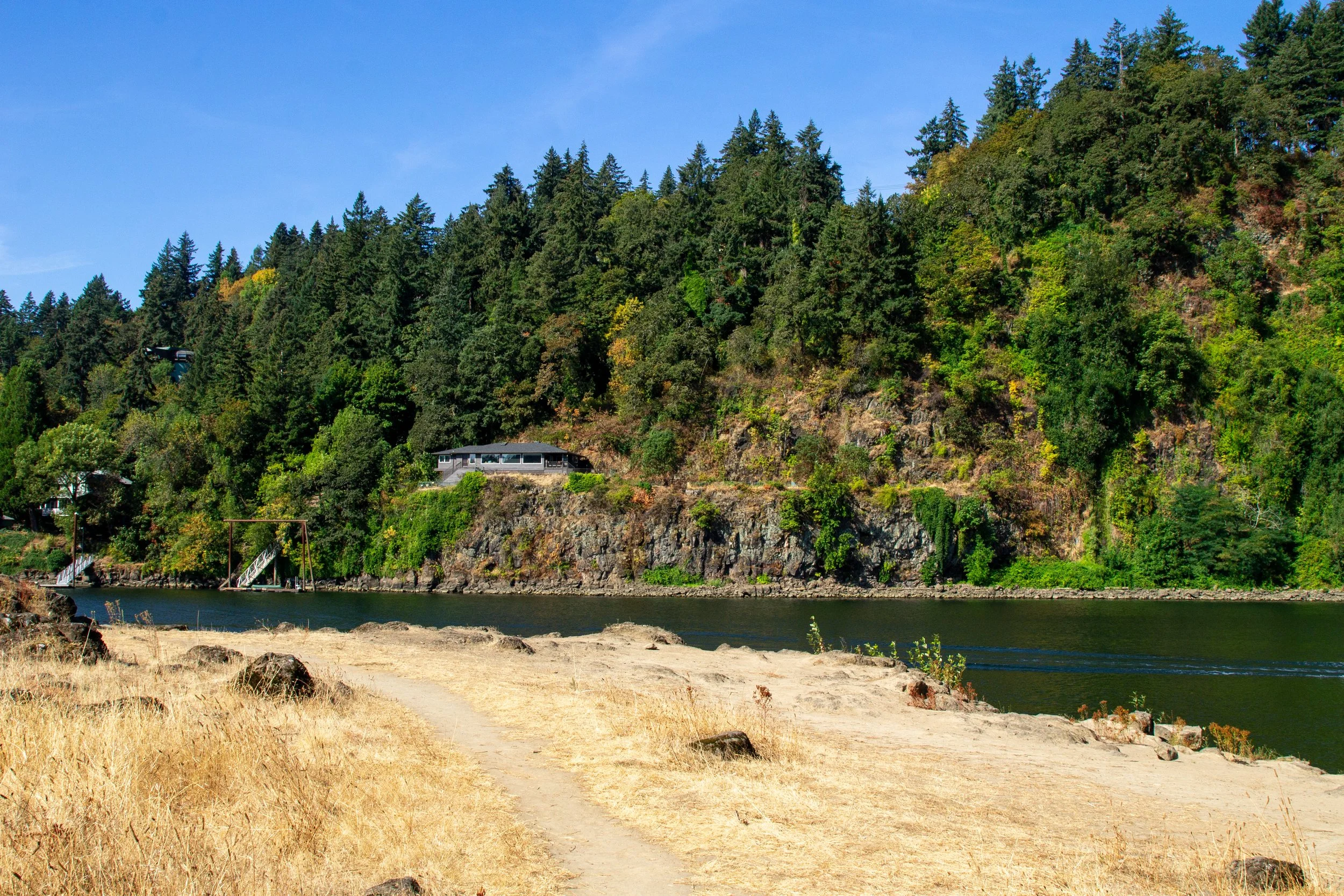
A trail circles Elk Rock Island
You’ll have the Willamette River in sight for the whole journey. It’s a trail to do slowly and savor rather than rush to finish. Rocky outcroppings are relaxing spots for a snack break while you watch the boats, paddleboards, and kayaks go by. This hike is great for bird-watching. You’ll notice the crows first, but you also have a good chance of spotting raptors, shorebirds, and songbirds.
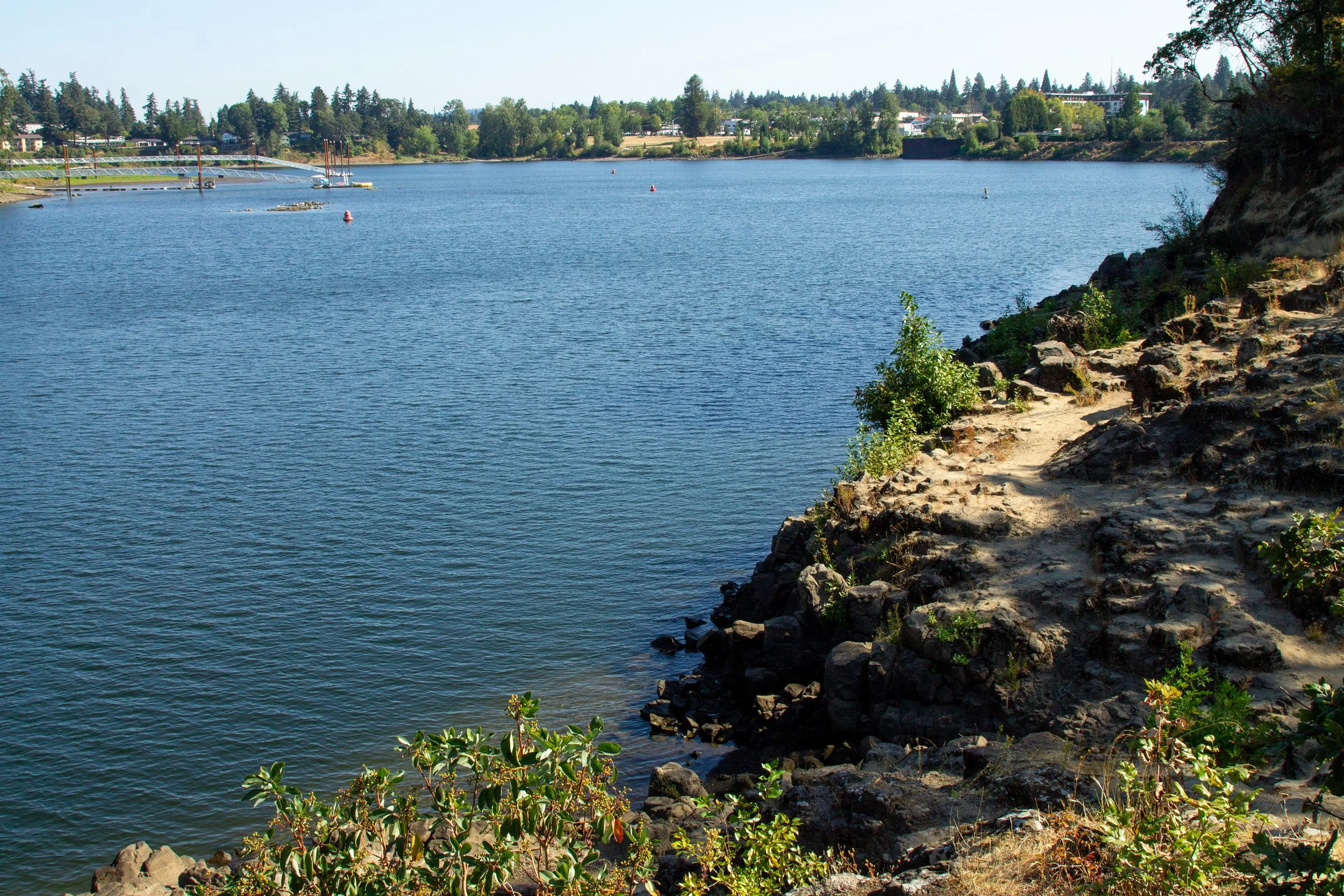
Willamette River
After circling the island, you'll be back at the land bridge. If you head back to the car now, the hike is about a mile.
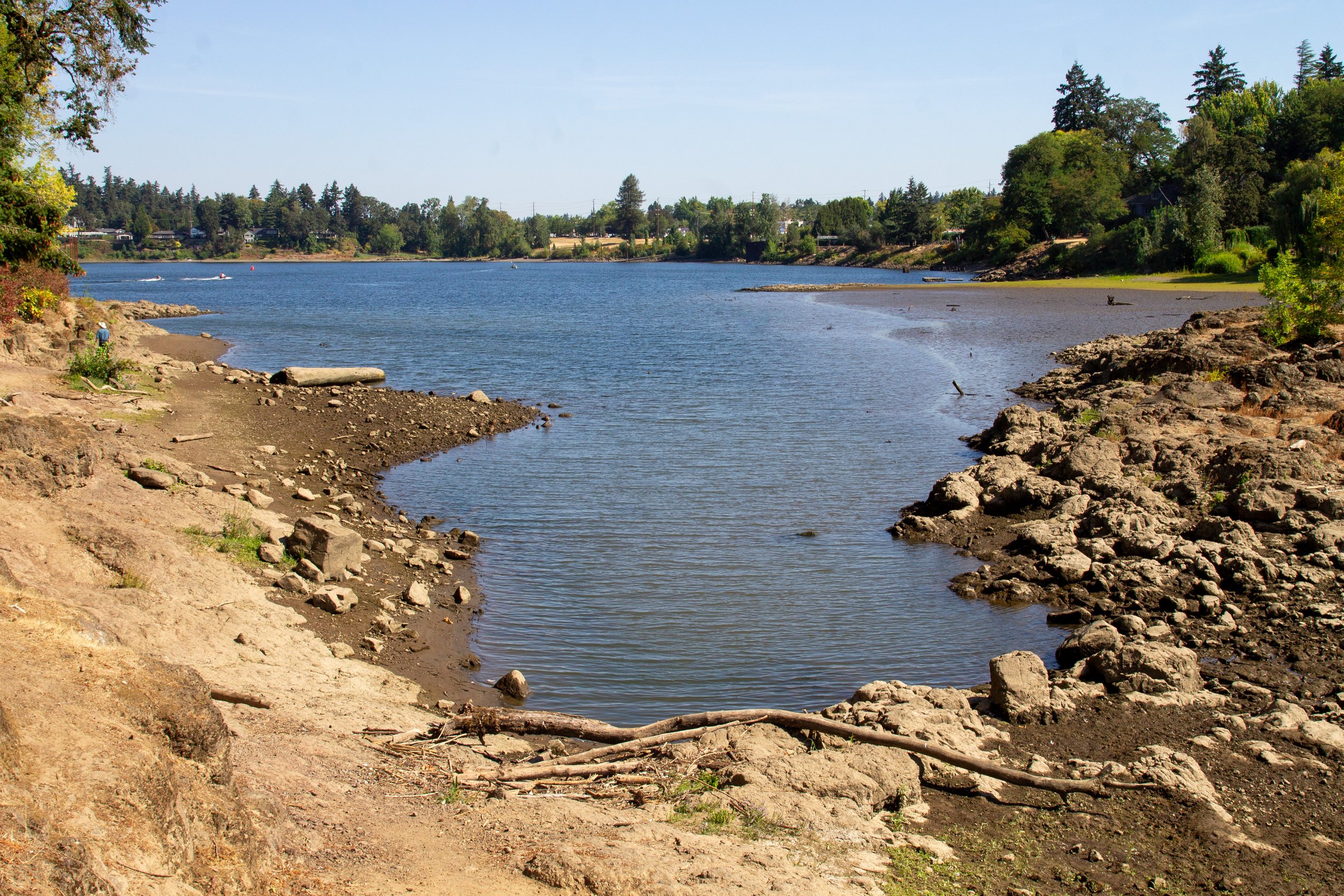
Elk Rock Island
You can make it a little longer by exploring Elk Rock Island’s interior. Look for the trail access on the island’s west side. It’s marked with a signpost.
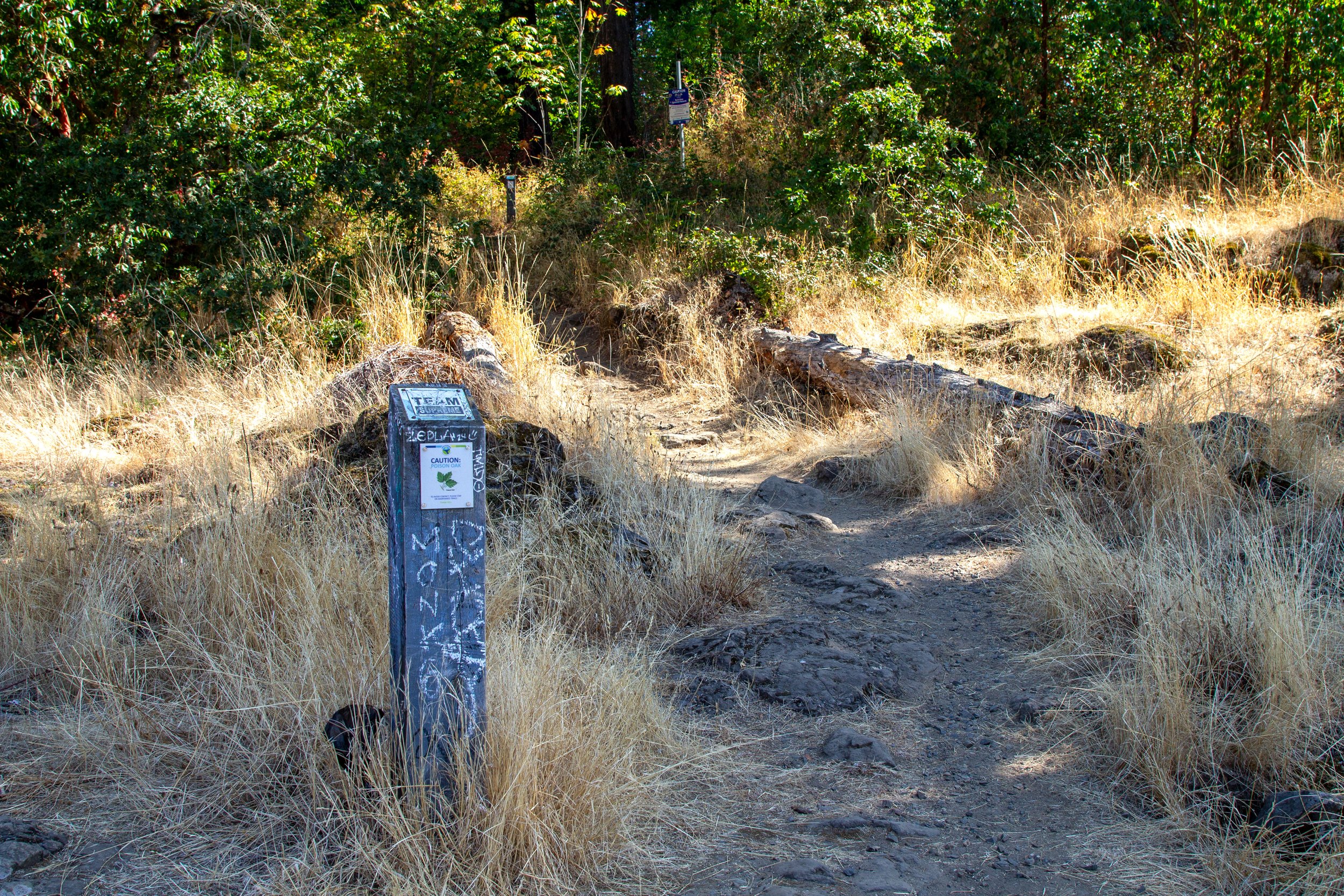
Access to interior trails
I find the interior less interesting than the perimeter trail, but the island has a nice mini forest despite the thin soil. The trees are a mix of Doug fir, big-leaf maple, Oregon white oak, and cottonwood. The undergrowth has native plants like snowberries and salal, as well as introduced ones like English ivy and Himalayan blackberries. The trails are a little overgrown. Do your best, and wear long pants to protect from poison oak.
Plants and animals on Elk Rock Island
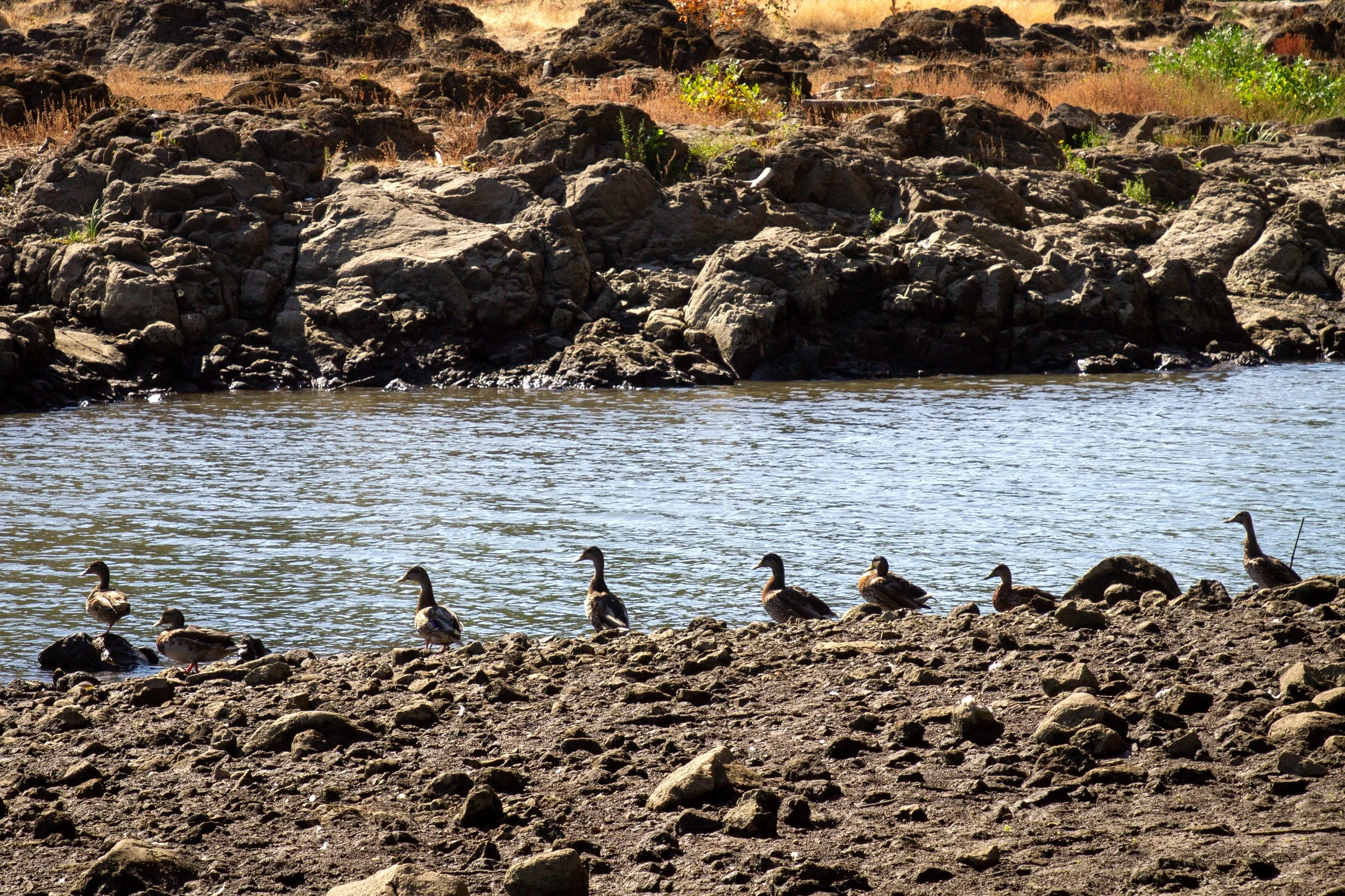
Mallards on Elk Rock Island
Elk Rock Island packs a ton of ecological diversity into a small space, including some rare plant species. It has seven habitat types:
Basalt Floodplain
Emergent Wetland
Mesic Upland Forest (forest requiring medium amounts of water)
Riparian
Rock Face
Willamette Valley Grassland
Xeric Upland Forest (forest that can tolerate some dry conditions)

Elk Rock Island
These varied conditions make it an important habitat for birds, mammals, reptiles, and amphibians. People have spotted dozens of bird species from Elk Rock Island, including bald eagles, killdeer, ducks, geese, gulls, and songbirds. One of Elk Rock Island’s most specialized habitats is the vernal pools that form on the rocky land bridge when river water levels drop. Look for invertebrate life in the pools when they’re present.
Geology of Elk Rock Island
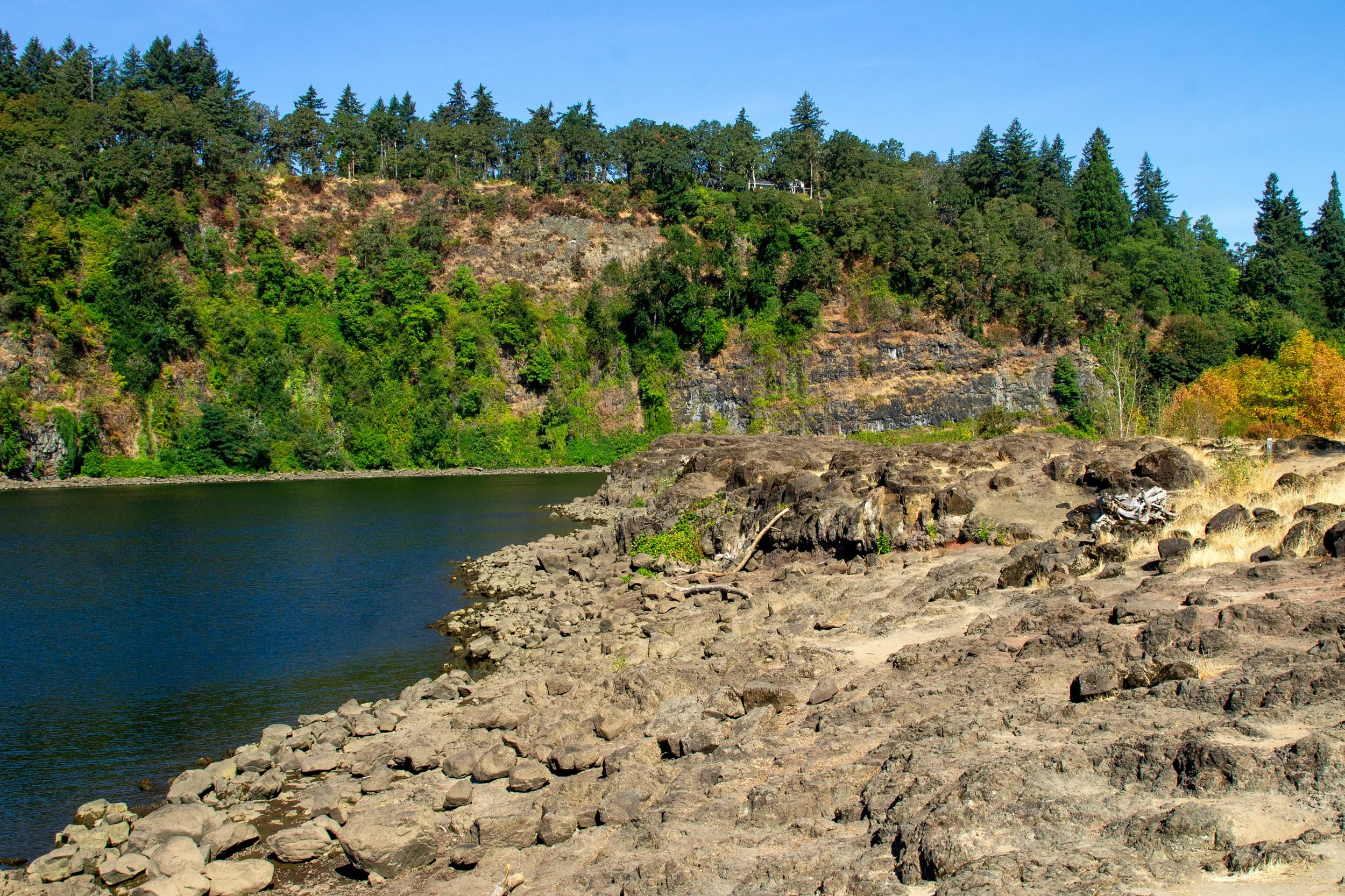
Elk Rock Island is made of 40-million-year-old basalt
Elk Rock Island has some of Portland’s oldest exposed rock. Most of the basalt you see in and around the city is less than 20 million years old, including in the Columbia Gorge. Elk Rock Island is the core of an ancient volcano that erupted around 40 million years ago, depositing Waverly Heights basalt. It’s very hard and has persisted after the Willamette River wore away the softer overlying layers. While more Waverly Heights basalt exists underground, Elk Rock Island is a rare place where you can see it at the surface. It also forms Spring Park and the cliffs across the river from Elk Rock Island.
Getting there
The trail to Elk Rock Island begins at Spring Park Natural Area.
Address: 2001 SE Sparrow St, Milwaukie, OR 97222
By car: From Portland, take OR-99E S until SE 22nd Ave, then take a right. In 0.2 miles, turn right onto Wren Ave. Spring Park will be at the end of the street in 0.2 miles. The drive from Portland takes about 15-20 minutes.
Transit: You can get close to Spring Park Natural Area on the MAX. Take the Orange Line until the Milwaukee/Main St stop. It’s a 15-minute walk from the MAX stop to Spring Park.
Enjoy your trip to Elk Rock Island!
With love,
Emma
Explore nearby
Find the best parks for hiking in Portland.
Visit Portland’s wildlife-watching hotspots.
Find the best hikes within 1 hour of Portland.
References:
Miller, Marli Bryant. Roadside Geology of Oregon. Missoula, Montana: Mountain Press Publishing Company, 2014.
Portland Parks and Recreation. Elk Rock Island Natural Area Management Plan, 1995.